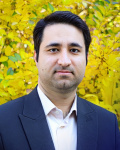
Dr. Mojtaba Hajiabadi, a graduate of Electrical Engineering with a focus on Telecommunication Systems, earned his Bachelor's degree in 2012 from the University of Birjand, his Master's degree in 2014, and his Ph.D. in 2018 from Ferdowsi University of Mashhad. He was an outstanding student, holding third rank in his Bachelor's, first in his Master's, and first in his Ph.D. In 2018, he completed a doctoral research opportunity at KU Leuven University in Belgium under the supervision of Professor Marc Moonen, a distinguished IEEE Fellow.
During his Ph.D., Dr. Hajiabadi received several awards from the National Elites Foundation, including research grants, teaching assistantships, and an international research opportunity grant. After completing his studies, he worked for five years in Iran's telecommunications industry, contributing to satellite communication transceivers in the aerospace sector and optical telecommunication systems at the Infrastructure Communications Company. Since 2022, he has been a full-time faculty member in the Communication Engineering Department, Faculty of Electrical and Computer Engineering, at the University of Birjand. His research interests include adaptive filters, machine learning, and AI in wireless communication systems.
If you are interested in collaborating on research in his field of expertise, you may contact him via the following email address:
Email: mhajiabadi@birjand.ac.ir