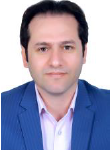
Dr. Mostafa Vahedipour received his Ph.D. in Electrical Engineering from the University of Birjand in 2017. His doctoral research focused on demand management in smart microgrids with an emphasis on ensuring system security. During this period, he was awarded a prestigious scholarship from the Iranian Ministry of Science, Research and Technology, which enabled him to conduct research as a visiting researcher at Aalborg University, Denmark, from 2016 to 2017.
After completing his Ph.D., Dr. Vahedipour continued his academic career as an Assistant Professor at the University of Birjand, where he played an active role not only in research but also in educating and training future generations of engineers. In 2020, he was awarded an international research fellowship at the University of Salerno, Italy, where he focused his research on energy management in smart grids. This collaboration expanded his research expertise and led to stronger interactions with the University of Vaasa, Finland where he was a post doc researcher.
Currently, Dr. Vahedipour is an Associate Professor in the Department of Electrical Engineering at the University of Birjand, Ferdows Faculty of Engineering. ALso, now, he is working as a team leader at Nowocert, research and Innovation Division, Dublin, Ireland.
In parallel, he serves as a member of the Board of Directors of Saha Niroo Savis Company, a technology-based company operating in the field of energy management in Iran. His dual roles in academia and industry have enabled him to bridge the gap between research and practical solutions in energy management.
My affiliation
Department of Electrical and Computer Engineering, University of Birjand, Birjand, Iran
Nowocert, research and Innovation Division, Dublin, Ireland.